Tree Plantation
Native species drives across temples, schools and roadsides — mapped, geotagged, and cared for.
5,800+Saplings rooted
A community of students, sanitation workers, farmers and dreamers — planting forests, ending plastic, and giving the next generation a planet still worth inheriting.
We are a grassroots NGO from Tirupati working at the intersection of ecology and civic life. Our work begins where most movements end — at the doorstep of a school, beside a clogged temple pond, in the hands of a sanitation worker.
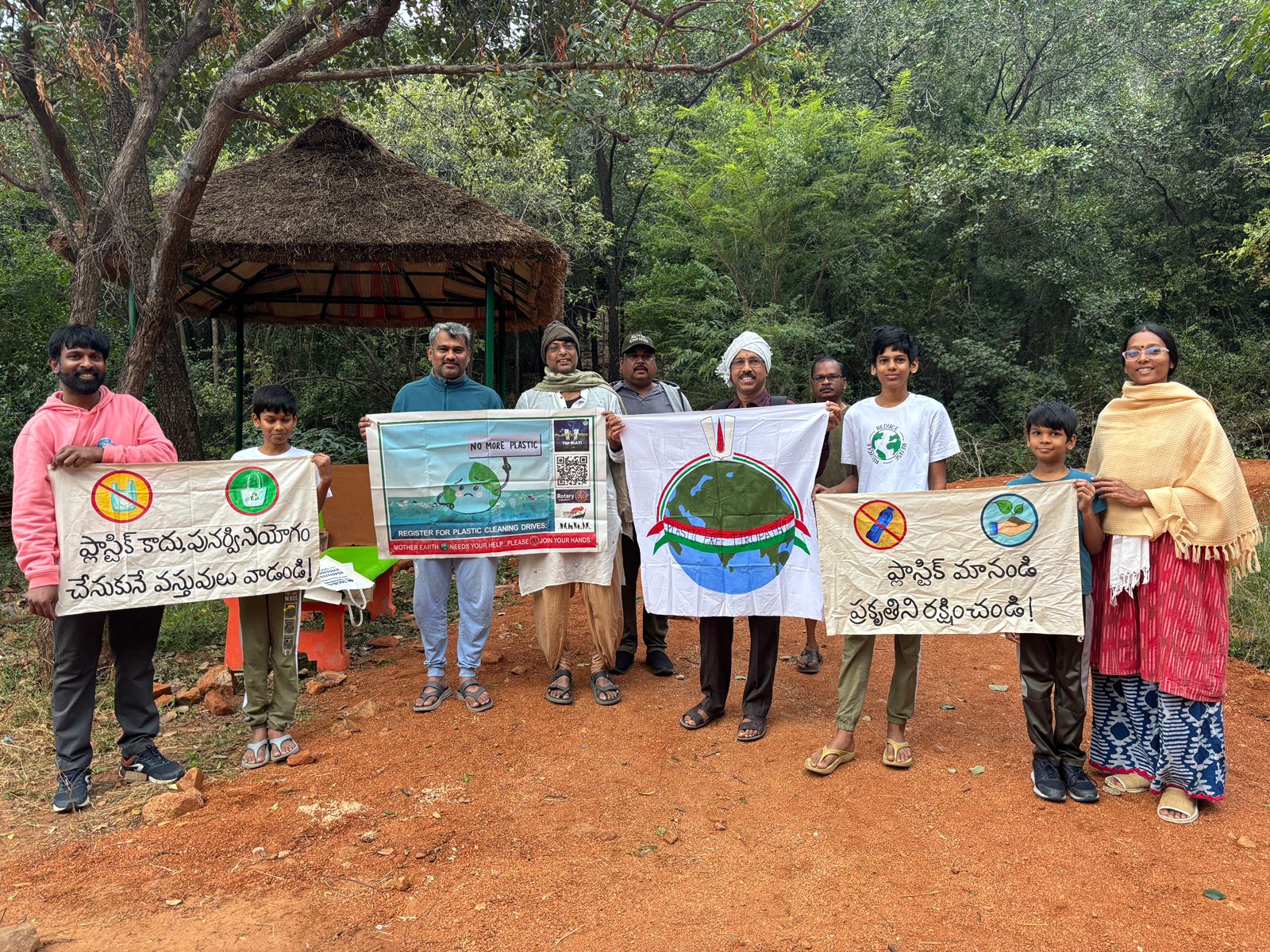
Our work is to make environmental responsibility a daily habit — through plantation drives, plastic refusal, and dignifying the people who clean our cities every morning.
By 2030 we want to see one million native saplings rooted across South India, plastic-free schools as the norm, and a generation of children who can name the trees in their neighborhood.
From the soil of a sapling pit to the corridors of a college, our programs touch every layer of the ecological commons.
Native species drives across temples, schools and roadsides — mapped, geotagged, and cared for.
Storytelling sessions, eco-clubs and plastic audits inside government and private schools.
Hackathons, design sprints and field projects co-created with university chapters and clubs.
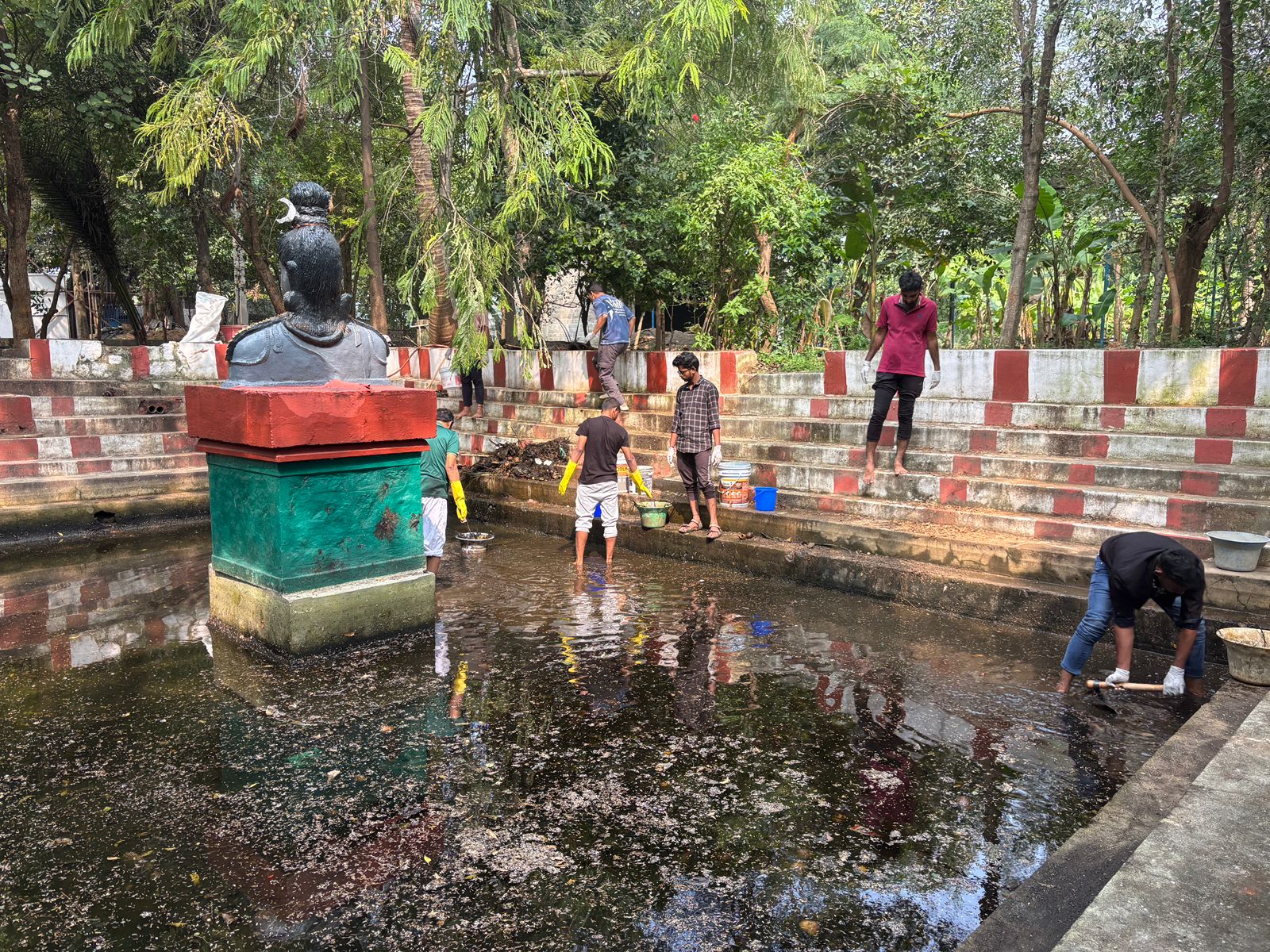
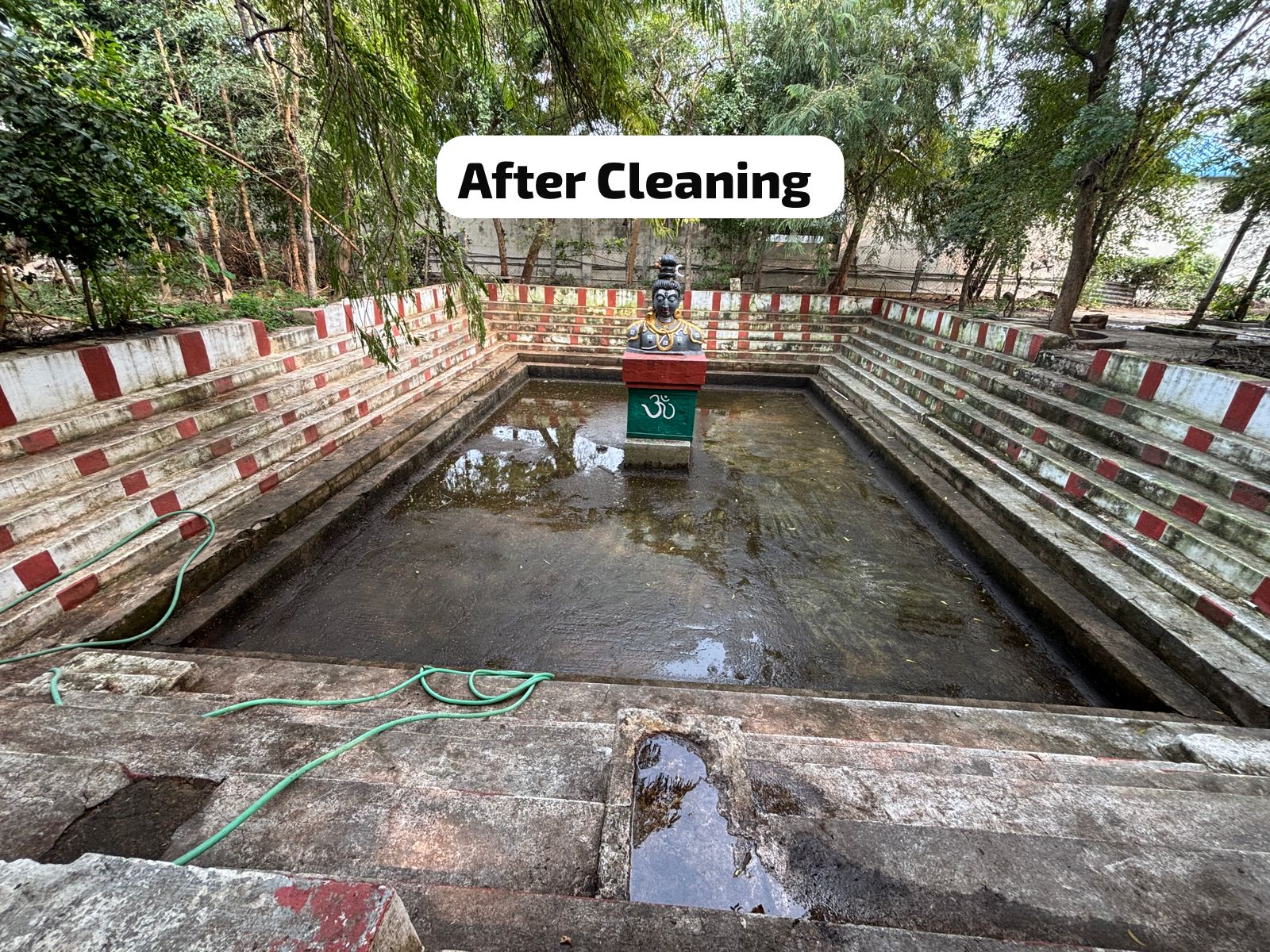
Restoring temple ponds, lakeshores and bus stands — before and after, in plain daylight.
Yearly felicitations, kit distribution and dignity programs for the people who clean our city.
Composting, seed-banking, water-saving and biodiversity walks — open to all ages.
Monthly micro-missions — bring a bottle back, plant a seed, write to a worker — gamified for joy.
Rotary, civic bodies and citizen groups — stronger together than any of us alone.
Every figure below is a person who showed up, a seed that took root, a city corner that got cleaner. We measure what we can — and remember what we can't.
Native species across Tirupati, Chittoor and rural Andhra.
Through eco-clubs, workshops and monthly missions.
Diverted from temples, festivals, schools and weekly markets.
Temple ponds, lakeshores and public spaces restored.
The children no longer ask why we are picking up plastic — they ask if they can come along. That, more than any number, is the change we wanted to see.
Watch what 5,800 saplings, 4,500 children and a hundred sanitation workers feel like — together — when their stories settle on a single planet.
A pond cleaned in Tirupati. A child who refuses a plastic bag. A street tree that grew tall enough to shade a sleeping sanitation worker. The planet doesn't notice in pieces — but it remembers in totals.
Four flagship programs run year-round. Each is designed to be hyper-local, child-friendly, and easy to replicate in any neighborhood that wants in.
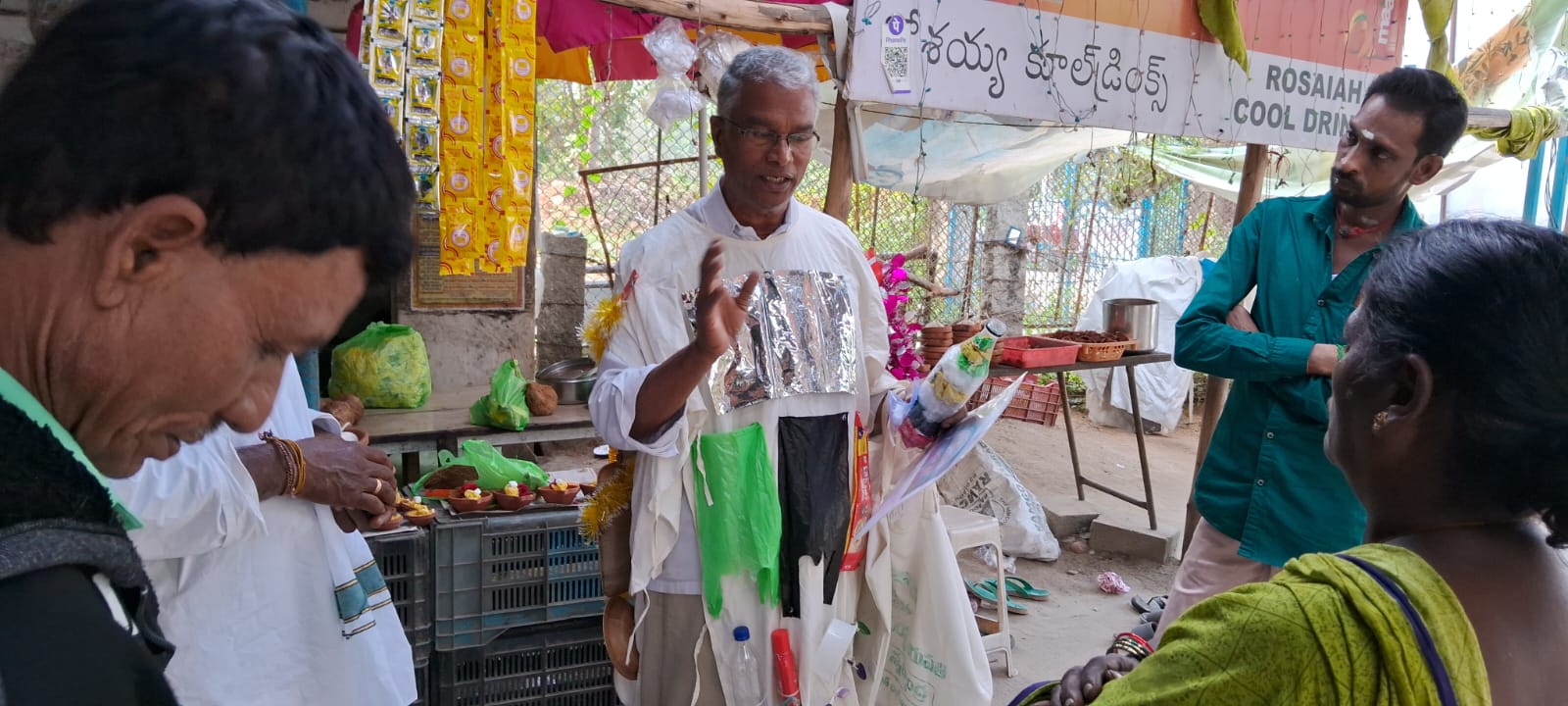
We don't wait for people to find us. We walk through markets, temples and bus stands with banners in Telugu, English and Hindi — handing out cloth bags, telling stories about plastic, and listening twice as much as we speak.
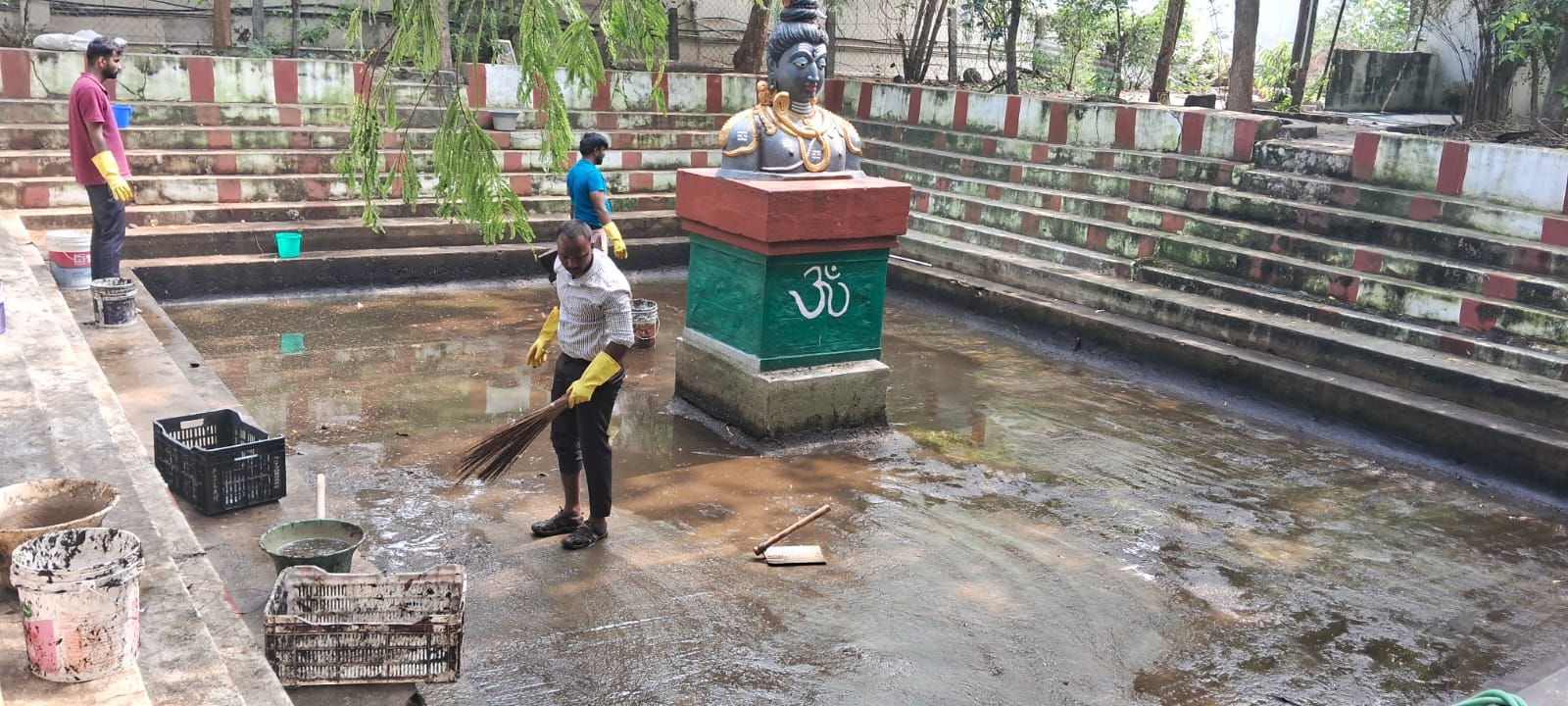
Every restoration project pairs volunteers with municipal sanitation workers — not as bystanders, but as equals. We supply gloves, masks, refreshments, and most importantly, public recognition. Photos like this one travel further than any speech.
A sapling is a promise to a future child. We plant only native species, geotag each one, and assign a "tree parent" — usually a student or family — who returns to water and visit it for two monsoons.
Children aren't just participants — they're the protagonists. We run monthly eco-missions in partner schools, where kids design their own campaigns, collect data on their household plastic, and earn badges that mean something to them and to their teachers.
We partner with schools, colleges, civic bodies, faith groups and other NGOs. None of this is possible — or honest — alone.
Most of our volunteers came in for a single Sunday drive. They're still here three monsoons later. Here's the path.
No experience needed. Bring water, wear something you don't mind getting muddy, and meet the team at the closest gathering point in Tirupati. We hand you a tool, a partner, and a corner of the city that needs you.
After a couple of drives, most volunteers find their thing. Some love plantation, others want to teach kids, others quietly become the heart of pond restoration. We let you choose, and switch any time.
After six months of consistent participation, volunteers become certified Eco Stewards. You get a documented role, a stipend for travel, and access to lead community sessions with full backing.
The end-game is not for everyone to stay in Tirupati — it's for the movement to leave it. We help you set up an Eco Saviours chapter in your hometown with playbooks, design assets, and a network of mentors.
Not every story is a headline. These are the ones we tell each other when a drive gets hard.
Before-and-after photos that became the most shared post in our short history — and that sent us four new volunteer requests an hour for a week.
Read story →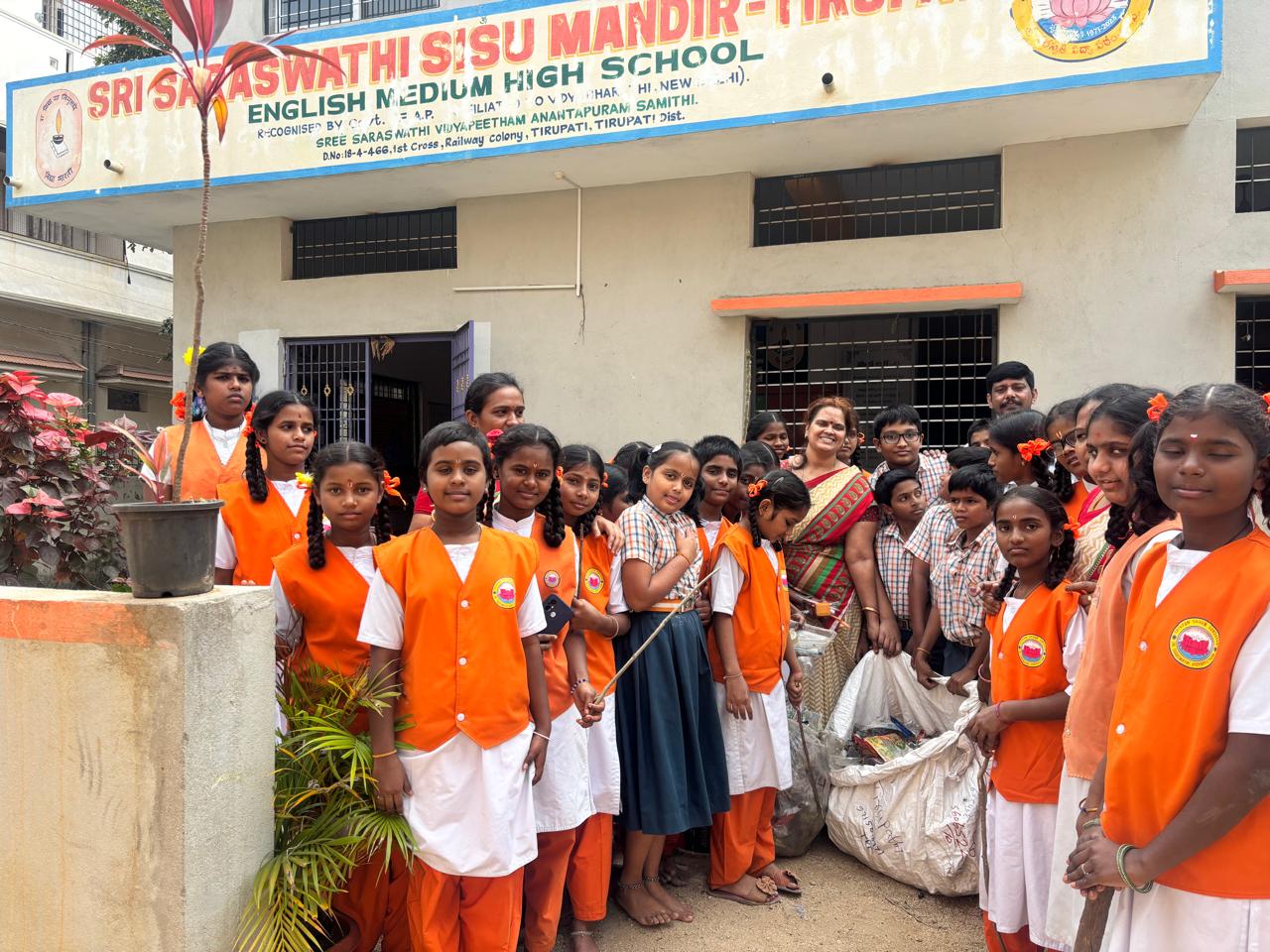
Volunteers carried hand-painted banners in Telugu through pilgrim routes — and 870 people signed up that weekend.
Read →
What started as a Q&A became a new badge program — designed by the students, not us.
Read →Scroll horizontally — drives, schools, ponds, plantations, and the people who made it happen.
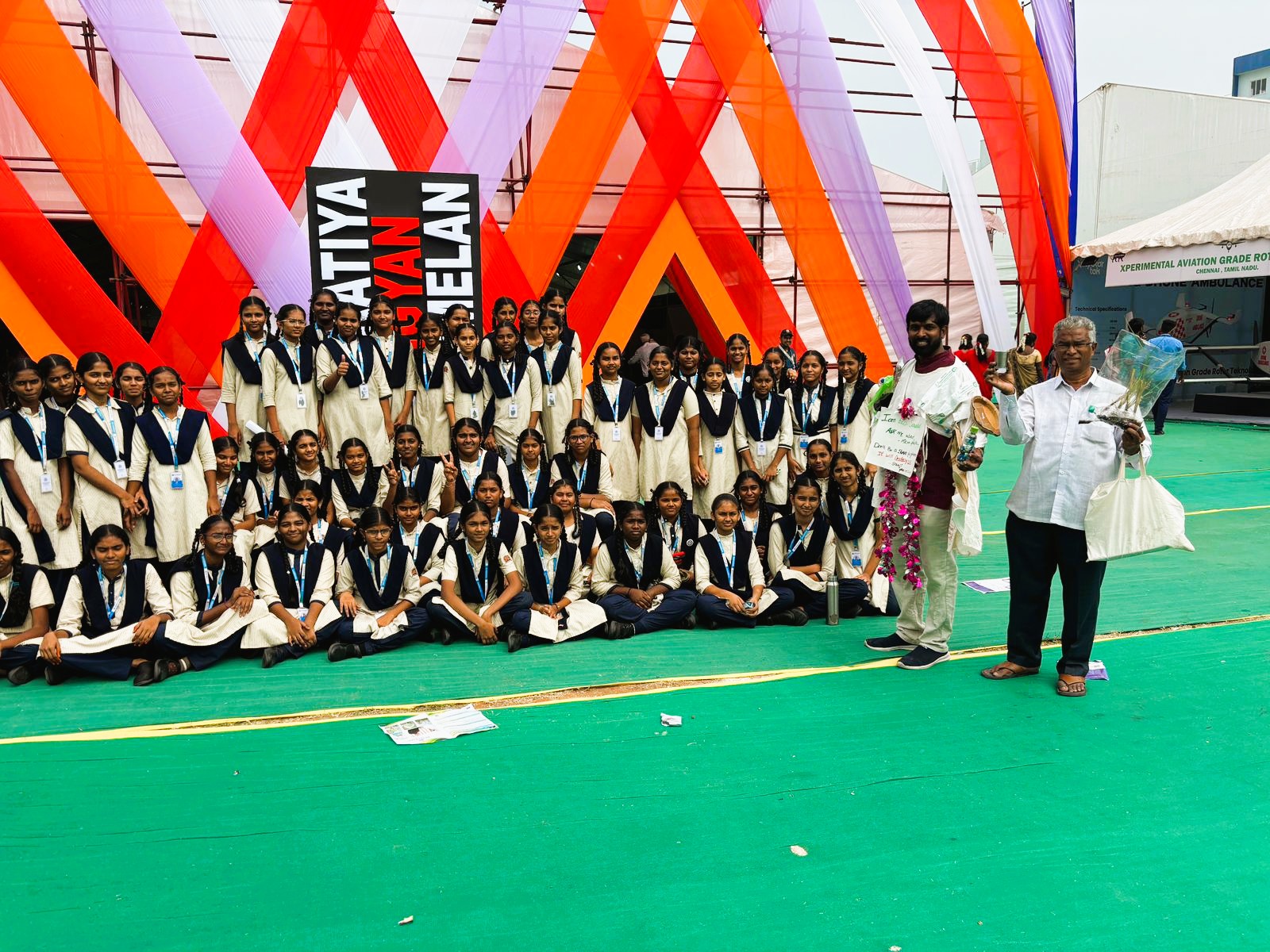
Drives, awareness walks, school visits and student stories — straight from our YouTube and Instagram.
No forms. No paperwork. Just send a message — and step into our WhatsApp community of volunteers, students and field stewards.
Drives, plantation calls, weekend meet-ups and school visits — all coordinated inside one warm, low-noise WhatsApp community. Tap below to say hello to any of our three coordinators. They'll take it from there.
Join the WhatsApp Community →Free · No spam · You can leave anytime · We'll greet you within a few hours.